

Today we’re focused on jail mental health once again. And you know what? Taking care of a jail is a lot of work. There are a ton of moving parts, inmates with unique needs, and all sorts of laws and regulations you need to abide by. Wouldn’t it be easier if someone else just did this for you? What if I told you that you could offload these responsibilities onto the courts and the Department of Justice? Well guess what? You can! And today I am going to teach you how to get the Department of Justice to take over your jail in four simple steps.
Civil Rights in Jails
Before we get into the method, we need to start with some basic concepts. Jails are temporary detention facilities generally intended to hold people who are alleged to have committed a crime, but who have not yet had a chance to resolve their case. Jails sometimes also hold people who have been sentenced to short periods of time, usually a year or less. Inside of these jails, there are two important constitutional amendments that protect the rights of inmates. These are the 8th and 14th amendments.
The 8th amendment prohibits cruel and unusual punishment, and acts like a shield for inmates who have been convicted. Inmates who have not yet been convicted or exonerated are usually referred to as pre-adjudicated, and for these inmates it’s the 14th amendment that’s the most relevant. The 14th amendment guarantees due process, which includes your right not to be punished for something you have not yet been convicted of. In either case, whether you’re dealing with pre-adjudicated or convicted inmates, the courts have established that jail inmates may not be subjected to inadequate or punitive conditions of confinement. This includes access to medical and mental health care. Interestingly, jails are one of the only places in the United States in which a person is constitutionally entitled to healthcare.
In addition to medical and mental health care, there are all sorts of things that inmates in a jail have a constitutional right to. These include, but are not limited to:
Safety, which includes protection from preventable violence (not all violence in jails is predictable and preventable) by either other inmates or jail staff, safety from dangerous hazards like exposure to chemicals or open flames, problems related to overcrowding, dangers related to poor facility maintenance like dirty cells, mold, rodents, bugs, etc.
Inmates also have a right to reasonable basic amenities like hot water for showers, working toilets, access to soap and toothpaste, and three meals a day. Inmates also have the right not to be placed in segregation for arbitrary reasons, they have a right to get out of their cells to exercise, they have the right to send and receive mail, and a right to meet with their attorneys.
Now, if these rights should be infringed, then the county and/or jail could be the subject of an investigation by the department of justice, and/or a civil rights lawsuit. Now, just for the sake of clarity, the DOJ is able to investigate jails and prisons if they have reason to believe that inmates’ rights are being infringed. They do not have to wait for a civil rights lawsuit. This is codified in the Civil Rights of Institutionalized Persons Act (CRIPA) of 1980. However, a lot of DOJ involvement in correctional settings is the result of civil rights lawsuits.
Step 1: Allow the Conditions of Confinement to Deteriorate
Now I said I would tell you how to get the DOJ to take over your jail. So here’s step 1. Create or allow conditions in your jail that infringe upon the rights of your detainees. It’s actually very easy to do this. Apathy is your best friend on this one. The two most important factors to running a good jail are 1) competent administrative staff who understand how to keep the train on the tracks and can lead by example, and 2) money. You need enough money to pay for regular maintenance, proper staffing, and if your inmates outgrow your jail, you need enough money to build an expansion or a new facility. So, if you want your jail conditions to deteriorate quickly, then make sure you fund it poorly and your administrators are incompetent. As an aside, most of the administrative staff I’ve met have been fairly competent, and they tend to want to do a good job so that they don’t get fired. So you might have better luck just neglecting the jail financially.
Step 2: Do Not Listen to the Sheriff or Jail Administration
Okay, so now your jail is starting deteriorate, staff are leaving, it’s getting overcrowded, and there are delays in medical and mental health care. So far, so good. On to step 2. As I said, most admin staff working in the jail are not going to just sit there while the jail falls apart. They are going to interview staff, review statistics, analyze budgets, and conduct studies on why the jail is failing and what would need to be done to correct the problem. They will eventually submit a report detailing the problem and asking for money for infrastructure maintenance or staff. Step 2 is to make sure you do not give them what they ask for. Now, they’re going to come to you with evidence and logical arguments about what needs to be done as well as the anticipated consequences of doing nothing. Your response to this is going to be to say, “these are hard economic times,” “the jail has to learn to do more with less,” and “there is no room in the budget at this time.”
Step 3: Pretend to Solve the Problem
Okay, so now that you’ve established untenable conditions of confinement and brushed off the jail administration when they tried to fix it, you’re ready for Step 3. It should be any day now that you are going to start seeing a spike in inmate grievances. You’re also going to start seeing angry letters from family, complaints from the state jail inspector, and civil rights lawsuits. Now, you might be tempted to ignore these. This is a mistake. What you want to do here is pretend to solve the problem without actually making an effort to do so. You want to implement some half-measures like minor policy changes or hiring a couple extra staff, but do not invest in any big systemic changes that would eliminate your problem. If you do that, DOJ is going to realize that your jail is functional and constitutionally adequate, and they’re not going to come and take over your jail.
Step 4: Find Creative Ways to Waste the Court’s Time
Now, it might take some time, but eventually the DOJ is going to investigate your jail, and issue what’s called a “findings letter” detailing the jail’s deficiencies and instructing you to address them. This is good news and means you’re in the home stretch. Obviously, don’t spend any money to fix these problems. It’s time for step 4. Instead of addressing the DOJ’s concerns, you want to spend the next couple years hemming and hawing and saying you’re doing your best. You might want to pay a consultant to come in and write a report that you won’t use, or maybe point fingers at one of your vendors and blame them in order to draw attention away from how underfunded the jail is. The name of the game here is to waste as much of the court’s time as possible. Because once the court gets angry enough at you for wasting their time, they will eventually order your jail into “federal receivership.” This officially removes the jail from your control, and puts it under the control of a court-appointed receiver, who will have broad power to put the jail back into working order.
This person is basically a God as far as your local government is concerned. This is because if the government doesn’t cooperate with the receiver’s plan to fix the jail, the court can order huge fines for contempt, which can be much more expensive for a county than simply paying to make the receiver’s recommended changes.
And just like that – Voila! You have officially lost control of your jail, and it will now be governed by the whims of the court-appointed receiver. Make sure to follow me for more recipes.
The Role of the Jail in the Context of County Government
Obviously I’m being sarcastic. The reality is that this exact cycle of neglect isn’t a joke. You absolutely do not want to steward your jail in this way. DOJ involvement in your jail is very costly and time-consuming. The main point I want you to understand is that it is much faster and cheaper to simply invest in your jail from the beginning, and to avoid all the stress of investigations and lawsuits.
Now, this pattern that I outlined for you – where jails are poorly maintained and poorly funded and therefore they slowly fall into disrepair and inefficiency, is probably more common than you think. And the reason for this is, as always, the incentives.
Let me explain to you the role of a jail in the context of county government. Counties don’t run jails because they want to, but because they have to. You can’t have a society without a police force, and you can’t have a police force without a jail to hold people who get arrested. In this way, counties are forced to pay for jails, whether they want to or not. Some very small counties don’t have jails, but in these cases they contract with other nearby counties to use their jails.
So, your elected officials, be they county councilmen or whoever, have many constituents and interest groups vying for their attention. And all of them want money. The police want money, the fire department wants money, schools want money, transportation wants money, parks and rec want money, etc., etc. Now, a lot of these services are politically popular. Voters generally approve of spending more on schools and police because everyone understands and values these services, and because having good schools and safe communities drives property values up.
On the other hand, things like sewer maintenance, waste management, and jails, are less popular. That doesn’t mean they’re less important. Any of these services, if underfunded, would create a huge and expensive disaster that county taxpayers would be on the hook for. But since most people don’t understand this, and because politicians know their constituents don’t understand it, they are less inclined to allocate funding for these services. On a similar note, politicians hate raising taxes, even though taxes, when spent in an intelligent way, always save taxpayers money in the long run.
The Cost of Failing to Maintain Crucial Public Services
Let me give you an example of this. In 2011, Flint Michigan was facing a 25 million dollar budget deficit. In order to address this, the state installed an emergency manager, who decided that Flint needed to immediately reduce spending by any means necessary. One of the actions taken was to stop paying to pump water into the city from Detroit, and to instead draw their water from the Flint river. Now, the water in this river was known to be corrosive, and unsuitable for the city’s water infrastructure. A solution to this corrosive water problem would have been to add chemicals to the water to inhibit these corrosive properties. However, the emergency manager, in order to save $140/day on the cost of these chemicals, decided not to do this. As a result, the corrosive river water ate away at the aging water pipes, causing lead to leak into the water supply, thereby not only rendering the water undrinkable, but completely destroying the entire water infrastructure for the town.
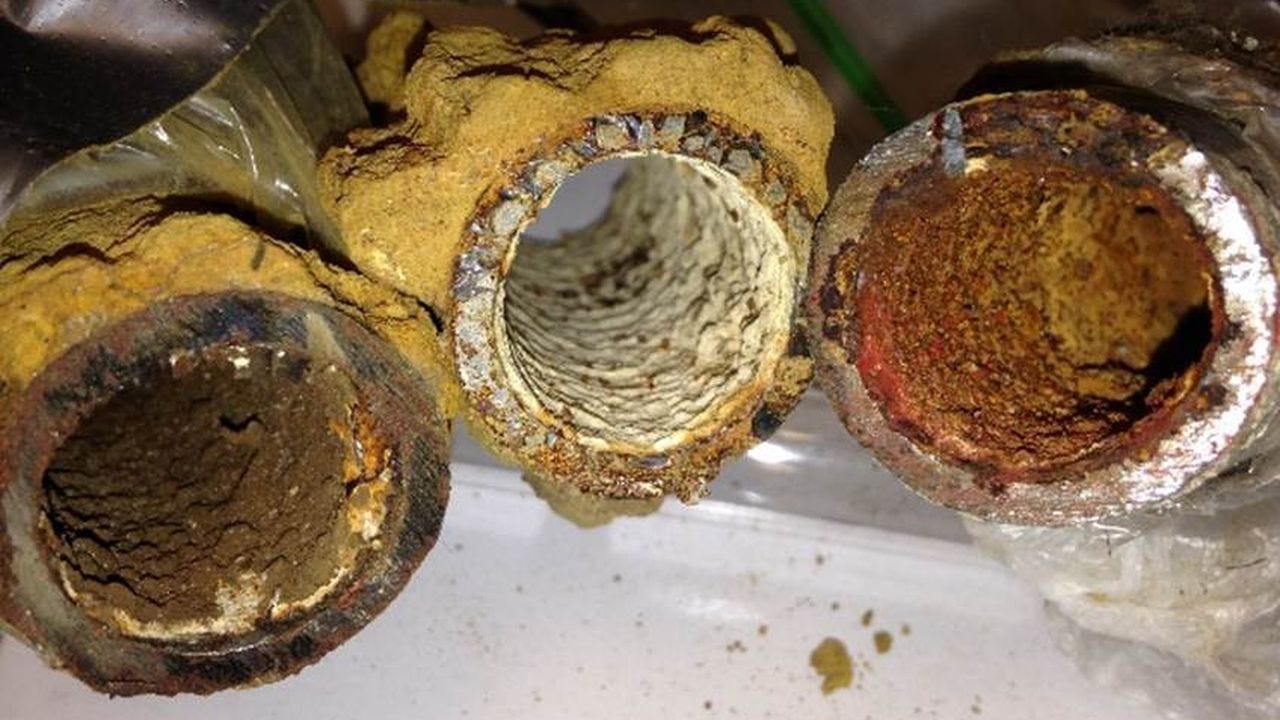
The cost to repair the destroyed water infrastructure was more than 400 million dollars, and of course thousands of people in the town filed lawsuits over their drinking water being poisoned by the government, which eventually turned into in a class action lawsuit which ended up being settled for 626 million dollars, the vast majority of which was paid for by the Michigan State government, which is of course funded by everyone who lives in Michigan.
So, in order to save $140/day, the government ended up on the hook for 400 million in infrastructure damages and 600 million in civil liabilities. But guess what? Since Michigan didn’t just have a billion dollars laying around, they had to take out a loan in order to cover these costs. And as we know, people don’t loan you money for free. They expect interest payments. In order to fund these massive obligations, Michigan took out a bond for $600 million dollars, and by the time they pay it off in 2051, they will have paid more than 400 million dollars in interest on this loan.
So let’s run the math one more time. In order to avoid paying $140/day through 2051, which would have cost 1.9 million dollars over 37 years, the state decided not to properly fund a necessary government service, and the resulting catastrophe cost them 1.4 billion dollars over the same time period. The government basically paid 736 times more money than it needed to, if it would have just done proper maintenance.
This is a National Problem
Now, a county jail works in the same way. If you do not invest the money on a regular basis to make sure your jail is maintained, properly staffed, and big enough for the inmate population, then taxpayers (which includes you and I) will incur dramatically higher costs than they need to.
Now, you may be thinking, that only happens in poorly managed counties. They wouldn’t do that in my county. They wouldn’t let the jail fall into disrepair and provoke a DOJ investigation. But are you sure?
Well it turns out that DOJ involvement in corrections is fairly widespread. There have been DOJ investigations in at least 45 US States and even territories like Guam and the Virgin Islands. The US Government maintains a website which includes a list of all active DOJ investigations into jails and prisons, as well as an archive of historical investigations and consent decrees which have since been resolved.
So – this isn’t an isolated problem. It happens nationwide. And it keeps happening. Just in the past two years we’ve seen settlement agreements and consent decrees in Wisconsin, California, and Georgia.
The Root Cause of Settlement Agreements and Consent Decrees
So, if this is so obviously bad, why do elected officials let it happen? Well, I mentioned earlier that voters 1) don’t like taxes, and 2) want to hear that their money is being spent on police and schools rather than jails and sewer maintenance. So, this is the key incentive hook right here: elected officials want to get reelected, so they try not to do things that are unpopular, even when that is both the morally and fiscally responsible thing to do. They do not want their opponents in the next election cycle running attack ads saying that they increased taxes or “they’d rather spend money on criminals than law-abiding citizens.”
So, what they do instead is simply let the jails languish until the DOJ gets involved and a federal court tells the county that they have no choice but to pay for jail improvements. That way the elected officials have political cover, and can tell their constituents, “I didn’t want to raise taxes or take out a 300 million dollar bond to build a new jail, but the federal government is forcing me to.” So what’s happening with all these settlement agreements and consent decrees, is that local elected officials are prioritizing short-term political gains at the cost of increased financial liabilities for local taxpayers. This mismatch between political incentives and the needs of the local community is the reason you see this pattern repeat itself over and over across the United States.
What We Can Do
So, what do we do about this? For me, the first solution that comes to mind is to have independent jail audits twice annually by a politically neutral party. And it turns out that states do have jail inspectors who come at least once annually – in my state it’s annually. However, the problem with these state jail inspections is that they’re really focused on the physical plant space of the jail such as do the lights and toilets work, and not systemic operational problems like officer shortages, delays in medical care, and overcrowding. These inspections create the illusion of accountability.
What we really need are inspections that focus on physical plant space AND inmate qualify of life and civil rights issues. On top of this, we need these inspections to have teeth. Every state is a little different but most state jail inspectors don’t really have much power beyond writing the local government a strongly worded letter if they find the jail to be deficient. If these state inspectors had to submit their reports to both state and federal authorities, there would be overlapping spheres of oversight, and it would help to reduce the potential for political bias. Moreover, these state and federal authorities should have the power to levy immediate fines on local governments for failing to take remedial action. This would force local politicians to either spend money to deal with the problem now, or explain to their constituents why they’re allowing the state to fine them tens of thousands of dollars on a regular basis for failure to act.
Feel free to contact your legislators with some of these suggestions. But honestly, I think the most impactful thing you can do is just to talk to your friends and neighbors about how important it is to support local jails, because if people understood the cost of letting their jail rot, politicians wouldn’t see funding them as a political risk, and continue to let them fail.